
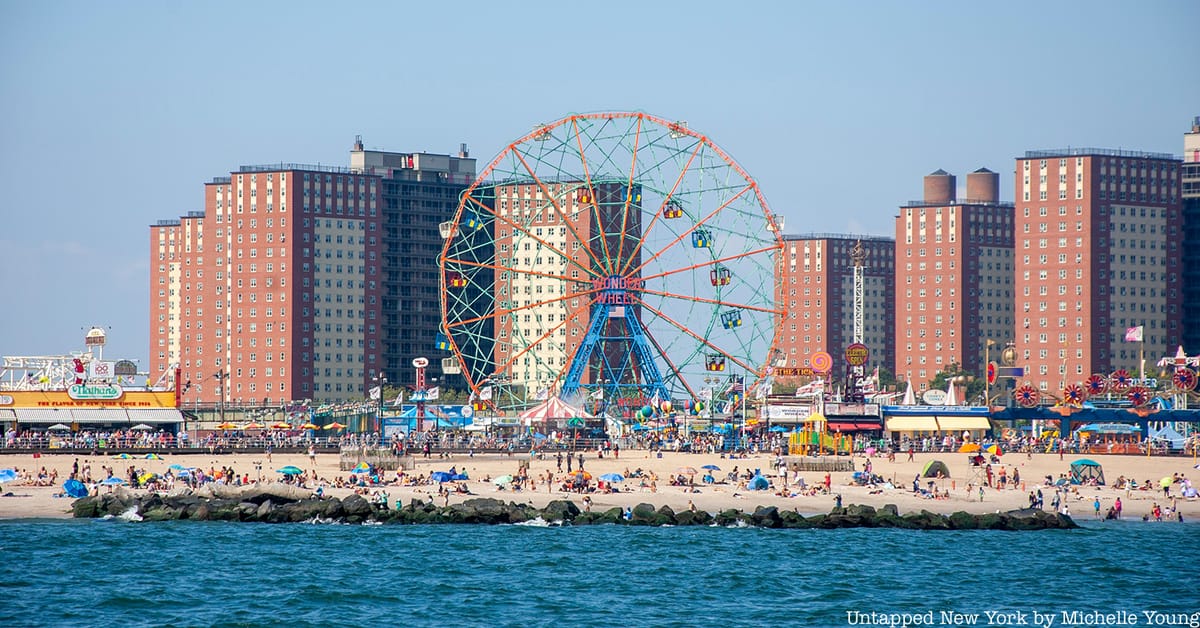
There’s no place in New York City more iconic for summer fun than Coney Island. This South Brooklyn neighborhood has long offered an escape from the city’s busy rhythm. As the heat returns and New Yorkers plan day trips, it’s the perfect time to explore how this seaside landmark has transformed over the decades.
A Seaside Escape Since the 1800s
Coney Island’s story began in the 1800s. By the early 1900s, it had already become America’s largest amusement district. Families flocked to its beaches, rides, and racetracks for a day filled with excitement.
During this golden age, three amusement parks Luna Park, Dreamland, and Steeplechase Park drew millions of visitors each year. Moreover, it offered a thrilling mix of innovation, entertainment, and seaside charm that few places could match. From 1880 to World War II, Coney Island stood as the nation’s favorite playground.
Decline and the Moses Redevelopment Era
However, by the 1960s, Coney Island’s popularity began to fade. All three major amusement parks had closed, and rising crime discouraged visitors. In addition, more people owned cars, which made other beaches easier to reach.
During that same period, Robert Moses, New York City’s powerful public works chief, launched large-scale redevelopment projects. He rezoned much of Coney Island for housing and parking in an effort to modernize the area. Unfortunately, many historic attractions disappeared as a result.
Even so, the neighborhood refused to lose its spirit. It slowly adapted and began to reinvent itself for a new generation.
A New Wave of Revival
Fortunately, a turning point came in the late 1950s. The New York Aquarium relocated from lower Manhattan to Coney Island, attracting families once again. Today, it features five exciting exhibits: Conservation Hall, Sea Cliffs, Aquatheater, Ocean Wonders: Sharks!, and Sharks, Rays, and Turtles.
Soon after, new restoration projects breathed life back into the area. In 1975, the classic Cyclone roller coaster—originally built in 1927—reopened after renovations. A few years later, the Parachute Jump earned recognition as a National Historic Landmark in 1980. Later on, new lighting and a modern pavilion transformed it into a nighttime icon along the boardwalk.
Over the following decades, the revival continued. The early-1900s B&B Carousell was beautifully rebuilt and reopened in 2013. The next year, a modern steel version of the Thunderbolt coaster debuted, honoring the beloved 1925 original that was demolished in 2000.
Modern Growth and New Attractions
Today, development continues to reshape Coney Island’s skyline. Deno’s Wonder Wheel Amusement Park, home to the famous 1920 Ferris wheel, is expanding once more. In fact, the owners plan to open a new family coaster called The Phoenix and several additional attractions. As a result, visitors will have even more ways to enjoy the park.
Step by step, these additions keep Coney Island exciting while still preserving its nostalgic character.
Timeless Energy by the Boardwalk
Even though Coney Island looks different from its early 20th-century version, the magic remains the same. The boardwalk still fills with laughter, music, and the smell of classic snacks. In the evenings, its bright lights shine across the water, reminding everyone of summers past.
Ultimately, this Brooklyn gem proves that some traditions never fade. Coney Island continues to blend nostalgia, renewal, and joy making it one of New York City’s most beloved summer destinations.
