
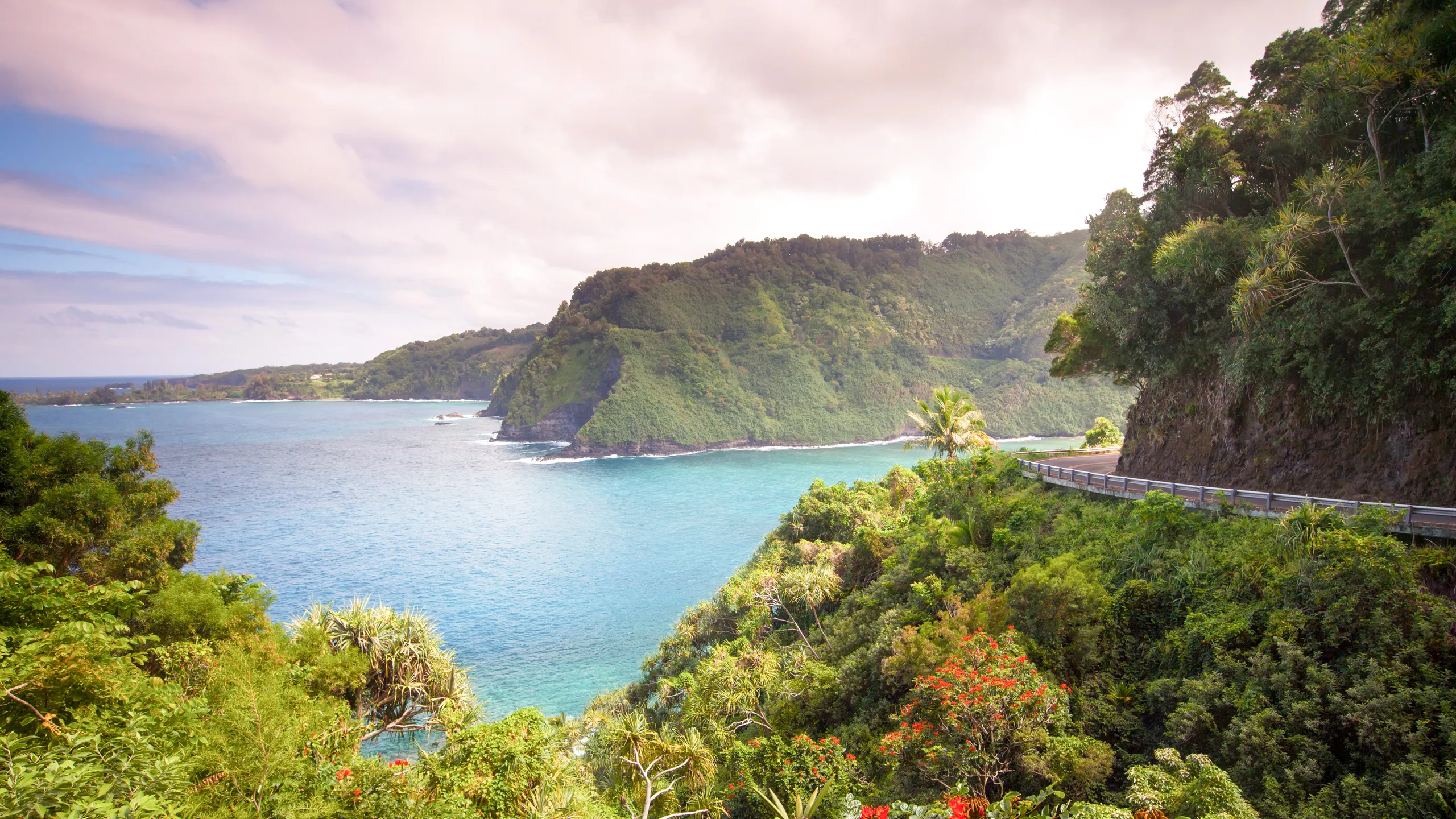
Maui, known as The Valley Isle, is the second-largest of the Hawaiian Islands and one of the most beautiful travel destinations in the Pacific. This Maui Travel Guide highlights everything you need to know before visiting from its breathtaking beaches and scenic volcanoes to the best times to visit, top hotels, and must-see attractions. The island’s vast central valley lies between two dormant volcanoes: Haleakala in the east and Mauna Kahalawai in the west.
Beaches and Coastline
Maui offers more than 120 miles of coastline and over 80 beaches more than any other island in Hawaii. Its beaches range from calm surf to rough waves. You’ll find white sand shores and rare red and black sand beaches near Hana.
Regions and Airport
Kahului Airport sits in Central Maui, between Haleakala and the West Maui Mountains. The island divides into five main regions.
West Maui
Home to resorts like Kaanapali, Kapalua, and Lahaina.
South Maui
Includes the resort towns of Kihei, Wailea, and Makena.
East Maui
Features the scenic Road to Hana and Haleakala State Park.
Upcountry Maui
Located on Haleakala’s slopes, where farms and ranches thrive in volcanic soil.
Central Maui
Contains Iao Valley State Park, a great place for hiking among lush forests and rivers.
Time Zone
Hawaii follows Hawaii Standard Time (GMT-10). It’s five hours behind Eastern Standard Time and two hours behind Pacific Time. Hawaii doesn’t observe Daylight Saving Time, so add one hour from March to November.
Best Time to Visit Maui
Summer (April–November)
Warm weather and low rainfall make these months ideal for beach activities. June to August attract families and tourists.
Winter (December–March)
The weather stays mild but rain is more common. The southern and western coasts are the driest. Lahaina and Kaanapali get about 10 inches of rain annually, while higher areas receive over 300 inches. Winter is perfect for escaping the cold and watching humpback whales, especially between January and March.
Things to Know Before You Go
Haleakala is dormant but not extinct. It last erupted between 1480 and 1600, according to the USGS. Its summit can get snow in winter.
Honokohau Falls, Maui’s tallest waterfall, drops 1,119 feet in two tiers. The best way to see it is by helicopter because it lies deep in a remote valley.
Lahaina once served as Hawaii’s capital until 1850 and was a major whaling port in the 19th century.
Maui County includes the islands of Maui, Lanai, Molokai, and Kahoolawe.
Aviator Charles Lindbergh is buried in the Palapala Ho’omau Church cemetery along the road to Hana.
When entering Hawaii, visitors must declare plants and animals for inspection. Before leaving, officials check luggage for unapproved produce, though inspected fruits and flowers are allowed home.
Airports and Transportation
Kahului Airport (OGG) is Maui’s main airport. Smaller airports operate in Kapalua and Hana. Molokai and Lanai also have their own airports.
You can explore Maui by shuttle, taxi, tour bus, or public bus. For more flexibility, rent a car at Kahului or Kapalua Airport.
The Maui Bus system runs 13 daily routes, including weekends, connecting major towns across the island.
Best Hotels in West Maui
The Westin Maui Resort Ka’anapali
Located steps from the ocean, this resort features ocean-view rooms, fine dining, and a private lounge.
Ka’anapali Beach Hotel
Set along a three-mile stretch of beach, it offers renovated rooms and a water activity center for snorkeling and paddleboarding.
Montage Kapalua Bay
Provides one- to three-bedroom homes, dining options, pools, a spa, and access to golf and water sports.
The Ritz-Carlton, Kapalua
Spread over 54 acres, this resort offers 466 upgraded rooms, six restaurants, tennis courts, a spa, and two championship golf courses, including the PGA Tour’s Plantation Course.
